Hand, foot and mouth disease: what Irish parents need to know
The spots, the mouth ulcers, how long it spreads and the question every parent asks first: when can they go back to crèche?
In short
Hand, foot and mouth disease is a common viral illness that mostly affects children under 10. It is usually mild and clears up by itself within 7 to 10 days. Keep your child home from crèche while they feel unwell and send them back once they are feeling better again. You do not need to wait for the blisters to heal.
- It starts with a sore throat, a temperature above 38°C and little interest in food. Mouth ulcers and a spotty rash on the hands and feet follow a few days later.
- Children are most contagious during the first 5 days after symptoms begin, and they can pass it on before any symptoms show.
- There is no cure and antibiotics do not work. Paracetamol or ibuprofen can ease the pain and fever while it runs its course.
- A rash together with a high temperature can sometimes be a sign of meningitis. If you are worried, get urgent medical help.
Can my child go to crèche today?
The HSE advice for temperatures, tummy bugs, chickenpox and the usual crèche germs. All free Lullagram tools
A text from the crèche about a hand, foot and mouth case, or a crop of spots on your own baby's hands, can sound alarming the first time. The reassuring truth is that it is one of the mildest bugs doing the rounds, and the name is far scarier than the illness. Here is what the HSE advice means in practice, from the first sore throat to the morning they can go back in.
What is hand, foot and mouth disease?
A common viral illness that spreads very easily and mostly affects children under 10, though older children and adults can catch it too. It is usually mild and clears up by itself within 7 to 10 days.
The usual culprit is a virus called coxsackievirus. After your child picks it up, it can take a few days before any symptoms appear, which is part of why it moves through a baby room so quickly. Children can catch it more than once, although later bouts are usually milder than the first.
And despite the name, it has nothing to do with the foot and mouth disease that affects farm animals. You cannot catch it from animals.
What are the symptoms?
It usually arrives in two stages. The first looks like any other bug: a sore throat, a temperature above 38°C and a child who does not want to eat.
A few days later the telltale signs appear: painful ulcers in the mouth, and a crop of raised, red spots across the hands and feet. The rash sometimes shows up on the groin and bottom as well. The spots can turn into blisters, which may be itchy or sore. Symptoms tend to be worse in babies and children under 5.
One important caution: a rash that comes with a high temperature can sometimes mean meningitis. If you are worried about your child, get urgent medical help straight away.
What it looks like
Hands and feet
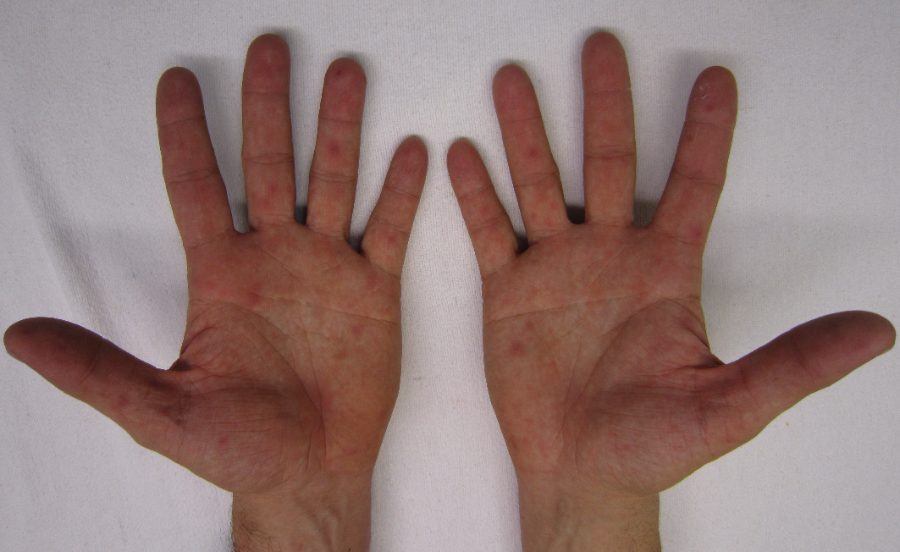

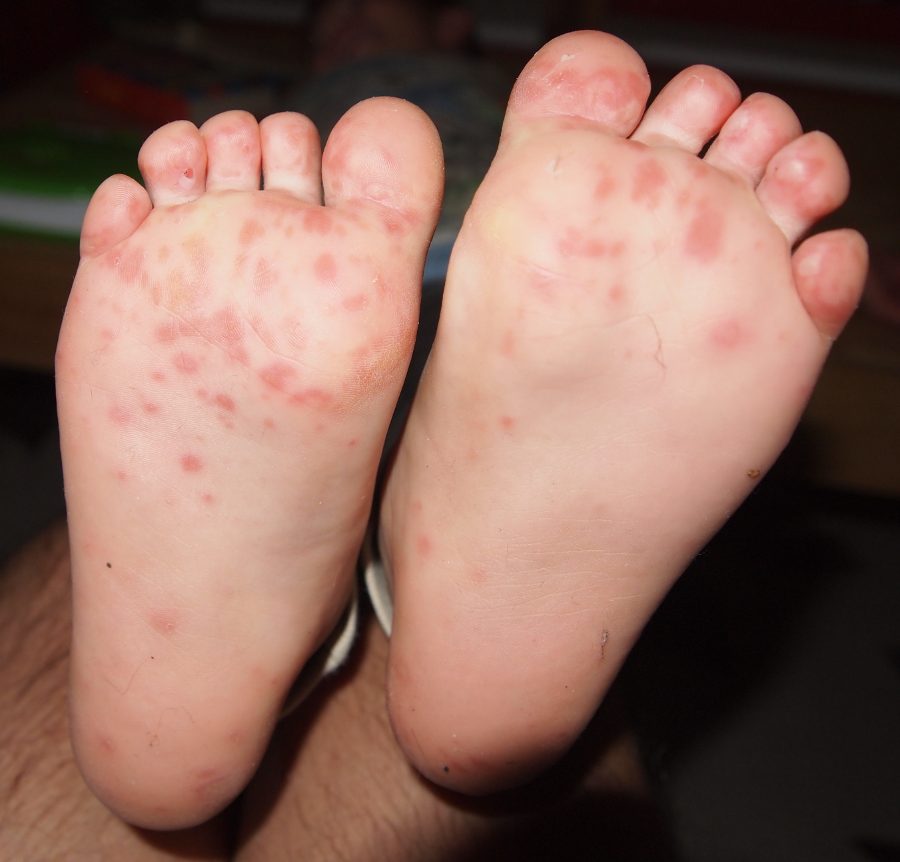

Raised red spots that can turn into blisters with a grey centre.
Sometimes the groin and bottom too
The spotty rash is not always limited to the hands and feet.
See the HSE's photoCan my child go to crèche with hand, foot and mouth?
Keep them home from crèche, preschool or school while they feel unwell, and let them return the moment they feel better again. You do not have to wait for every last blister to heal.
That last part surprises many parents, but the logic is sound: children with hand, foot and mouth are contagious before their symptoms ever show, so by the time you spot the rash the room has already been exposed. Keeping your child home for an extra week does not really stop it spreading. The HSE's test is simply how your child feels, not how their skin looks.
Do tell the crèche or school, so the staff can keep an eye out for new cases. Your crèche may also have its own illness policy with its own rules, which is worth a read. Our guide on when to keep your child home from crèche covers the HSE advice for all the usual bugs, and if you are still weighing up childcare, finding and choosing a crèche includes the sickness policy questions worth asking before you sign up.
How long is hand, foot and mouth contagious?
Children are most contagious during the first 5 days after their symptoms start. They can also pass the virus on before any symptoms appear at all.
It spreads through coughs and sneezes, through poo and through contact with the blisters or with saliva. That combination is why nappy changes, shared cups and chewed toys make a crèche the perfect place for it to travel.
How do I treat it at home?
There is no cure, so treatment means keeping your child comfortable while their body clears the virus. Antibiotics will not help, because this is a virus rather than a bacterial infection.
For the fever and the pain, you can give paracetamol or ibuprofen. Two rules apply: ibuprofen is only for babies over 3 months, and aspirin should never be given to anyone under 16.
What helps:
- Plenty of fluids. Small, frequent sips work best, and a straw can make drinking easier when the mouth is sore.
- Soft foods. Think yoghurt, mashed potato and anything that needs no chewing.
- A warm salty water rinse for older children who are able to rinse and spit.
- Keep breastfeeding if you are breastfeeding. It counts as fluids and comfort in one.
What to avoid:
- Anything hot or spicy.
- Citrus fruit, orange juice and other acidic foods, which sting the ulcers.
Your pharmacist can also advise on gels, sprays and mouthwashes that ease mouth ulcers. It is worth asking before you buy, as not all are suitable for small children.
When should I ring the GP?
For most children a GP visit is not needed at all. Make a non-urgent appointment if:
- your child is no better after 7 to 10 days
- your baby is under 3 months old and has a temperature above 38°C
- the fever lasts more than 3 days, or is getting worse
- your child is peeing less than usual
- the blisters are oozing pus, or the skin around them is very red
- you are worried, whatever the reason
If there is already an outbreak at your crèche or school, you usually do not need the GP to confirm the diagnosis. Ring the surgery first in any case. They may be able to deal with it over the phone.
When is it an emergency?
Go to the emergency department straight away if a child with hand, foot and mouth has any of the following:
- sensitivity to bright light
- a headache or a stiff neck
- drowsiness, or being hard to wake
- confusion
- a seizure
- trouble breathing
- vomiting
These are not the ordinary course of hand, foot and mouth. They need to be checked urgently.
What complications should I watch for?
Complications are uncommon, and the two worth knowing about are dehydration and infected blisters.
Dehydration happens because a sore mouth makes small children refuse drinks. Keep offering fluids little and often, and watch for fewer wet nappies or less peeing than usual. In severe cases a child can need fluids in hospital, which is another reason the fluids at home matter.
Infected blisters are best prevented: keep the blisters clean with lukewarm, soapy water and do not pop them. Pus or very red surrounding skin means a GP call.
Very rarely, a serious case can cause inflammation of the heart, brain or lungs. This is unusual, and the emergency signs above are the ones to act on.
Is hand, foot and mouth dangerous in pregnancy?
Normally, no. Catching it while pregnant usually poses no risk to the pregnancy or to your baby.
It is still sensible to avoid close contact with anyone who has it. If you catch it shortly before the birth, your baby can be born with a mild version of it. Talk to your GP or midwife if you have been in contact with hand, foot and mouth during pregnancy or think you have it yourself.
How do I stop it spreading at home?
Handwashing does most of the work. The same habits protect siblings, parents and anyone pregnant in the house:
- Wash hands well and often, especially after nappy changes and before preparing food.
- Bin used tissues straight away.
- Do not share towels or cups while anyone is sick.
- Wash soiled bedding and clothes on a hot wash.
- Clean the changing mat between changes.
- If a soother hits the floor, rinse it under the tap. Cleaning it in your own mouth is a very efficient way to swap viruses.
Keeping track while they are poorly
A sick week blurs fast: who gave the last dose of paracetamol, when the temperature last spiked, how much they actually drank. Lullagram lets both parents log temperatures, medicines, feeds and sleeps as the day goes, and makes a simple handover summary for the crèche, a grandparent or a childminder once your little one is on the mend. It works on Android, iPhone and web at lullagram.ie/app.
Frequently asked questions
Can my child go to crèche with hand, foot and mouth?
Keep them home while they feel unwell and let them return once they feel better. You do not have to wait for every last blister to heal, because children are contagious before symptoms show, so a longer exclusion does little to stop it spreading. Do tell the crèche or school.
How long is hand, foot and mouth contagious?
Children are most contagious during the first 5 days after symptoms start, and they can pass the virus on before any symptoms appear. It spreads through coughs, sneezes, poo and contact with the blisters or saliva.
How long does hand, foot and mouth last?
Most children get better by themselves within 7 to 10 days. There is no cure and antibiotics do not work, so treatment is about easing pain and keeping fluids up. See your GP if your child is still unwell after 7 to 10 days.
Is hand, foot and mouth dangerous in pregnancy?
Normally there is no risk to the pregnancy or the baby, but avoid close contact with anyone who has it. Catching it shortly before the birth can mean your baby arrives with a mild dose of it. Mention it to your GP or midwife if you have been around someone who has it or think you have it yourself.
Sources and guidance
The health guidance in this article comes from the HSE. The HSE's page on hand, foot and mouth disease was reviewed by the HSE on 9 July 2026. This is general information for parents in Ireland, not medical advice. Links checked 6 November 2026.
High Quality app that helped with the sleepless nights. Must have for new parents.